Type “best plastic surgeon in Dubai” into any search engine and you will get pages of paid rankings, sponsored “top 10” lists and clinic adverts dressed up as editorial. None of it is a medical assessment. Nobody audits those lists, nobody verifies the claims and, in many cases, a place on them can simply be bought.
The honest answer is that there is no single best plastic surgeon in Dubai — not for you, not for anyone. There is a demonstrably qualified surgeon who is the best fit for your specific procedure, your anatomy and your goals. So the right question is not “who is the best?” but “how do I verify that a surgeon is qualified, experienced in my procedure and safe?”. This guide is that checklist.
The eight criteria that actually matter
Measure every surgeon you are considering against these eight points. Each one is verifiable; none of them depends on marketing.
1. A verifiable DHA licence
Every surgeon practising in Dubai must hold a licence from the Dubai Health Authority. Ask for the licence number and check it yourself on the DHA’s public register at dha.gov.ae. A qualified surgeon will hand it over without hesitation; reluctance is itself an answer.
2. Board certification in plastic surgery specifically
‘Cosmetic doctor’ and ‘plastic surgeon’ are not the same qualification. Board certification in plastic surgery means years of dedicated surgical residency after medical school; a cosmetic doctor may have completed only short courses. Ask which board, in which country, in which specialty.
3. High annual volume in your procedure
Years in practice matter less than how often a surgeon performs your specific operation. Someone who carries out two hundred rhinoplasties a year is a different proposition from someone who does ten. Ask directly: how many of these did you perform last year?
4. Unretouched before-and-after photos
Ask to see unretouched results for patients with a similar body type and starting point to yours — not the clinic’s three best cases. Consistency across ordinary cases tells you more than one spectacular result ever will.
5. Surgery in a licensed hospital with a dedicated anaesthetist
Significant procedures belong in a licensed hospital operating theatre with a dedicated anaesthetist monitoring you throughout — not in a clinic treatment room. Ask where the operation takes place, who administers the anaesthesia and what happens in an emergency.
6. A clear written revision policy
Even excellent surgeons occasionally need to refine a result. Ask what happens if a correction is needed — and who pays for the surgeon, the facility and the anaesthesia. Get the answer in writing before you commit.
7. An honest risk conversation
Every operation carries risk, and a proper consultation covers it in plain language. A surgeon who minimises risk, promises outcomes or never says no is selling, not advising. Being turned down is often the mark of a good surgeon.
8. Verifiable society memberships
Membership of recognised bodies — national boards, ISAPS, ASPS, The Aesthetic Society — requires credentials vetted by peers, and each membership can be checked independently in the societies’ own directories. Treat any badge you cannot verify as decoration.
Red flags that should end the conversation
Some warning signs are not points to weigh up. They are reasons to leave.
- Same-day booking discounts or offers that “expire today” — a safe surgical decision is never urgent.
- Guaranteed results. No honest surgeon guarantees a biological outcome.
- A price far below the market with no itemised written quote — understand what a realistic plastic surgery cost in Dubai includes before you compare numbers.
- Heavily filtered photos, or results with no watermark or provenance — stolen images are common.
- Pressure tactics of any kind, from non-refundable deposits to “only one slot left”.
- A clinic that discourages second opinions. Confident surgeons encourage them.
Rankings, awards and Instagram are not credentials
Paid “top surgeon” lists, follower counts and award badges are marketing, produced for whoever commissioned them. The DHA register is a fact. The hospital where a surgeon holds operating privileges is a fact. The surgeon’s logbook is a fact. When marketing and verifiable fact disagree, the fact wins — and a surgeon whose reputation rests on facts will gladly point you to them.
Apply the checklist — to anyone, including Dr. Valente
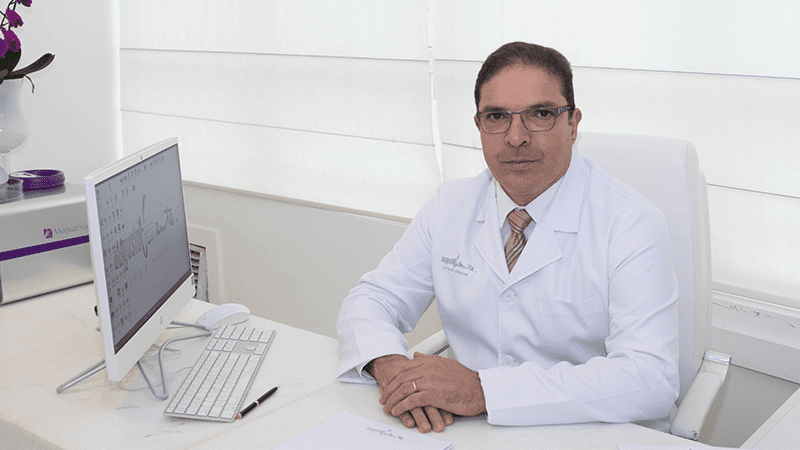
A framework only works if you apply it without exceptions, including to the surgeon whose website you are reading now. Dr. Augusto Valente publishes his DHA licence, his society memberships — SBCP, ISAPS, ASPS and The Aesthetic Society — his training lineage at the Ivo Pitanguy Institute and NYU, and his record of 27+ years and 7,500+ surgeries on Dr. Augusto Valente’s full profile precisely so that they can be verified rather than taken on trust. Hold him to the same eight criteria you would apply to any other surgeon in Dubai — and if a credential matters to your decision, check it.
The final test is the consultation itself. An honest one includes a frank discussion of risks, limitations and alternatives — and, when appropriate, the advice that surgery is not right for you at all. You should leave with information, not a contract: there is no pressure to decide on the day, and any clinic that suggests otherwise has already failed the checklist.
Written by Dr. Augusto Valente Plastic surgeon in Dubai