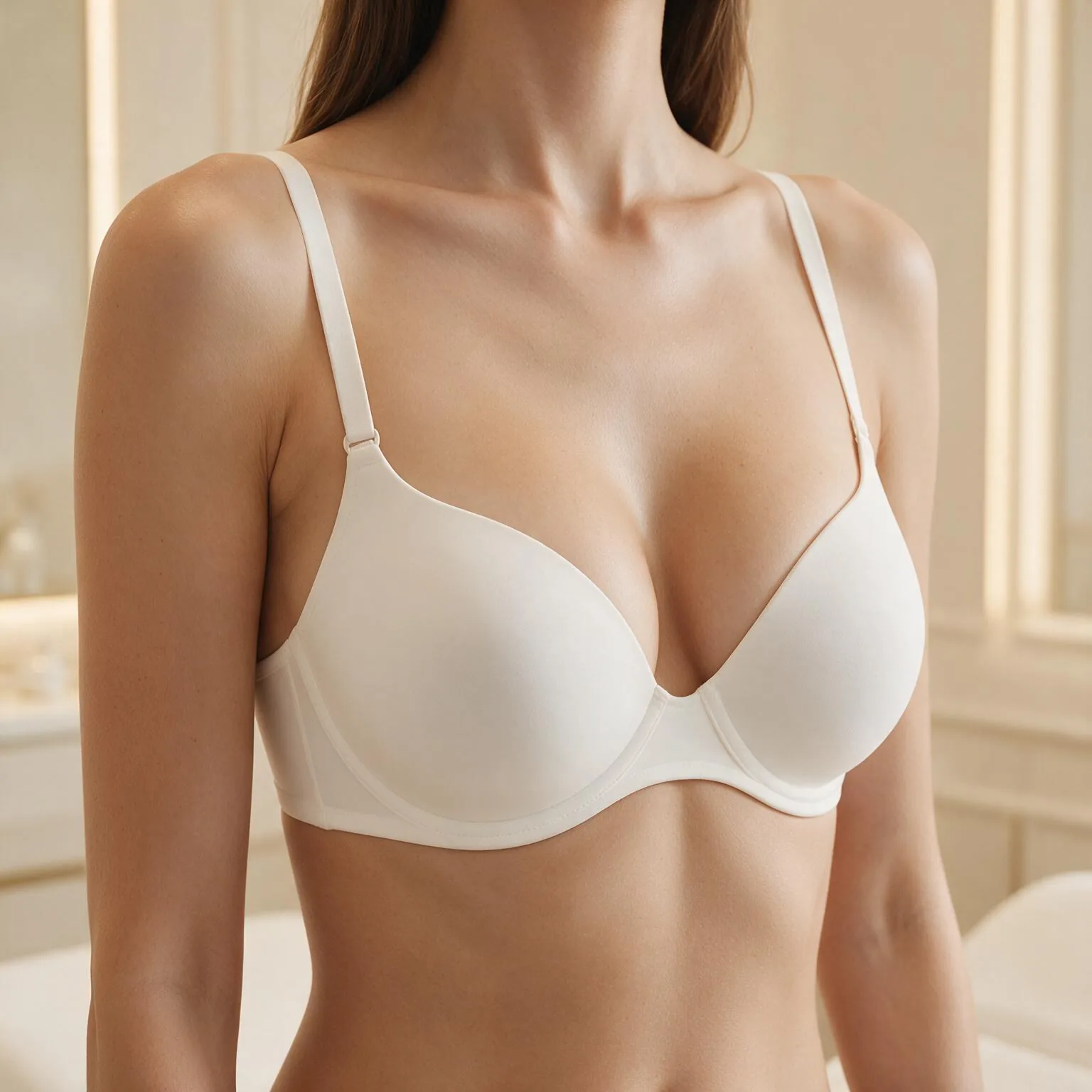
Breasts change in three distinct ways, and each has a different answer. Lost volume is corrected by adding volume. A change in position is corrected by a lift, which repositions tissue and does not add volume. Breasts that feel too large and heavy are corrected by a reduction. Some plans combine two of the three.
Answer in 30 seconds
- Lost volume is corrected with an implant or fat transfer.
- Lower position is corrected with a lift, which repositions tissue and skin and does not add volume.
- Too large and heavy is corrected with a reduction, which removes tissue, fat and skin and repositions the nipple.
- A lift and an implant answer different complaints. Confusing the two is the commonest cause of disappointment.
- Descent happens for reasons outside your control: pregnancy, breastfeeding, weight change, time and gravity.
- In the UAE a reduction is sometimes medically indicated where symptoms are documented. Coverage depends entirely on your policy.
Consultations at The Offices 2, One Central, 6th Floor, Dubai.
What actually changes after pregnancy and breastfeeding?
Three things change, and they change independently of each other: volume, position, and the relationship between the breast and the skin holding it.
“Have your breasts changed after pregnancy, weight loss, or over time? Maybe you lost volume, they sit lower, or they feel too large and heavy.”
This is not something anyone did wrong. Descent follows pregnancy, breastfeeding, weight change, and simply time and gravity. It is anatomy responding to ordinary life.
Do I need a lift or an implant?
That depends on whether your concern is position or volume. A lift changes position. An implant changes volume. They are not stronger and weaker versions of the same operation.
A breast lift repositions breast tissue and the nipple higher on the chest and removes excess skin. It does not add volume.
An implant adds volume. It does not lift.
If both apply, both are done, often in the same operation.
| Your concern | The operation that addresses it |
|---|---|
| Breasts feel smaller than they were | Implant, or fat transfer |
| Breasts sit lower than they did | Lift |
| Both smaller and lower | Lift combined with an implant |
| Too large, heavy, causing symptoms | Reduction |
What does choosing an implant actually involve?
Five decisions, not one. Most people arrive thinking only about size.
- Material. Silicone gel or saline.
- Shape. Round, or anatomical, sometimes called teardrop.
- Profile. How far the implant projects.
- Placement. Above the muscle, below it, or dual plane.
- Incision. Usually in the fold beneath the breast, where the scar is best concealed.
Size is the decision people worry about most and the one least often responsible for regret. The other four shape how the result reads and how it ages. The full range is set out under breast surgery in Dubai.
When is a reduction the right answer?
A reduction is the right answer when size and weight are causing physical symptoms rather than only aesthetic concern.
Persistent neck, shoulder and back pain. Bra strap grooving. Skin irritation. Difficulty exercising.
The operation removes breast tissue, fat and skin, and repositions the nipple. Where symptoms are documented and significant, breast reduction is occasionally treated as medically indicated rather than purely cosmetic in the UAE. Coverage depends entirely on your policy, so that conversation belongs with your insurer as well as with a surgeon.
How is the right option decided?
By establishing which of the three changes is actually bothering you, and then examining what is present.
“Depending on the problem, a lift, implant, reduction, or combination may help improve the shape and proportion. Book your consultation and we can discuss which option is right for you.”
What each plan involves, and therefore what determines the cost of surgery, follows from which of the three changes is being corrected and whether more than one is addressed at once.
Request a consultation to work out which of the three changes applies to you.
Written by Dr. Augusto Valente Plastic surgeon in Dubai