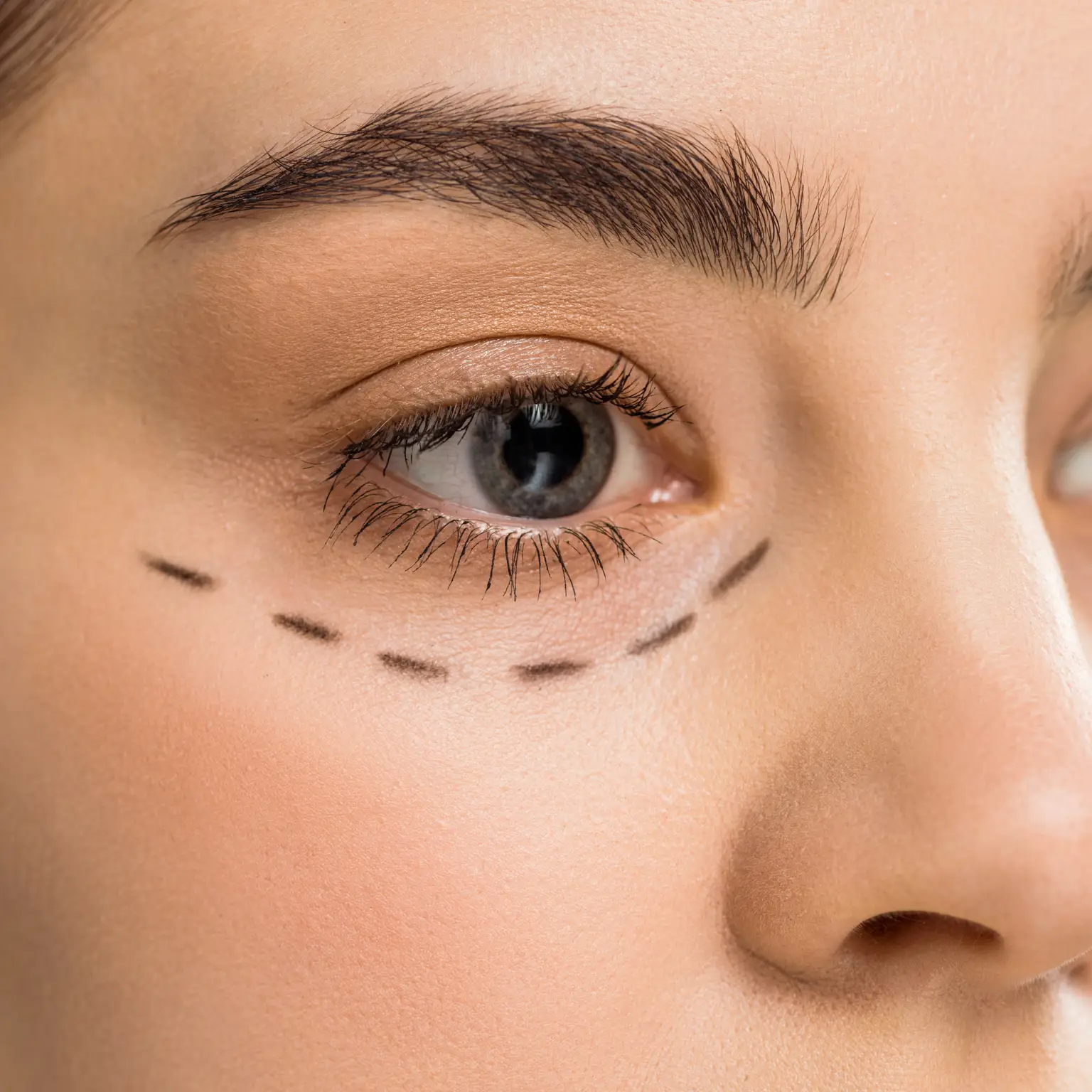
Facial Rejuvenation
Facial rejuvenation is not one procedure. It is a category covering skin-quality treatment, volume restoration, tissue repositioning, eyelid and brow surgery and neck treatment and the right approach depends entirely on which layer of facial ageing is causing the change you see.
The Offices 2, One Central, 6th Floor, Dubai, UAE
What is facial rejuvenation?
Facial rejuvenation is an umbrella term for treatments that restore a rested, more youthful facial appearance surgical, non-surgical, or a combination. It is not the name of a specific operation.
The practical consequence: two clinics can quote you for “facial rejuvenation” and be describing completely different treatments at completely different price points. In the UAE market the term is used by laser clinics to mean skin resurfacing, by aesthetic clinics to mean injectables and energy devices, by single-modality clinics to mean one specific treatment, and by plastic surgery practices to mean structural surgery. All four use the same two words which is why patients arrive confused.
A patient with hollow temples and a patient with jowls both describe themselves as “looking tired,” and they need different treatments. That is the reason a treatment name cannot be selected from a website.
Facial rejuvenation vs skin rejuvenation
Skin rejuvenation treats the skin itself tone, texture, pigmentation, pores and fine surface lines. Facial rejuvenation is broader. The distinction determines which specialist you should see, not merely which treatment you should buy.
| Factor | Skin rejuvenation | Facial rejuvenation |
|---|---|---|
| Primary focus | Skin quality and surface | Whole-face ageing across layers |
| Typical concerns | Texture, tone, pigmentation, fine lines | Skin, volume, descent, eyelids, jawline, neck |
| May involve surgery | Usually no | Sometimes |
| Treats significant tissue descent | No | May |
| Usual specialist | Dermatology / medical aesthetics | Plastic surgery |
If your primary concern is texture, pigmentation or acne scarring, a dermatologist is the right first appointment not a plastic surgeon. A practice that cannot tell you that is not assessing you properly.
What is actually ageing your face?
Facial ageing happens in six layers, and most faces are ageing in several at once. Identifying which layer is driving the change you notice is the single most useful thing a consultation can do because each layer has a different answer. This map is a framework for understanding, not a self-diagnosis tool.
| What you notice | Likely underlying layer | Category of assessment |
|---|---|---|
| Dullness, pigmentation, rough texture | Skin surface and photodamage | Skin-quality treatment |
| Lines that appear when you move your face | Dynamic movement | Muscle-modulating assessment |
| Hollow temples, flat cheeks, shadowed under-eyes | Volume loss | Volume restoration assessment |
| Jowls, deepening folds, loss of jaw definition | Soft-tissue descent | Lifting assessment |
| Hooded upper lids, under-eye bags, heavy brow | Eyelid and brow ageing | Periorbital assessment |
| Loose neck skin, banding, lost jaw–neck angle | Jawline and neck laxity | Lower face and neck assessment |
The UAE climate is relevant to the surface layer: high year-round UV exposure accelerates photoageing, and patients often show more surface change than their age would suggest. Descent, by contrast, is a positional problem the tissue has not disappeared, it has moved. That is why adding volume to a descended face often makes it look heavier rather than lifted.
What each category can and cannot do
Each category of treatment has a limit it cannot cross and almost every disappointing facial result comes from a treatment applied to the wrong layer.
| Treatment category | Can help with | Cannot reliably do |
|---|---|---|
| Skin resurfacing and energy devices | Texture, tone, pigmentation, fine surface lines | Reposition descended tissue |
| Muscle-modulating treatment | Dynamic expression lines | Restore lost volume or lift the face |
| Dermal fillers | Selected volume loss | Remove loose skin or lift descended tissue |
| Facial fat grafting | Restore volume using the patient’s own fat | Provide a lifting effect on its own |
| Lifting surgery | Reposition descended tissue, remove excess skin | Improve pigmentation or skin texture |
| Combined or staged plans | Address multiple layers together | Stop the ageing process |
No laser, radiofrequency or ultrasound device repositions descended tissue. Devices work on the skin and, to a limited degree, the layer beneath it. Claims that a device or thread delivers “a facelift without surgery” should be treated with scepticism.
Why “facelift” can mean five different things in Dubai
In the Dubai market the word “facelift” is applied to at least five different things, at prices spanning more than an order of magnitude. The price differences reflect fundamentally different procedures not differences in clinic quality.
| What it is called | What it actually does | What it cannot do |
|---|---|---|
| Thread lift / “non-surgical facelift” | Limited, temporary tightening without repositioning | Reposition established descent |
| Skin-only facelift | Tightens skin without treating the deeper layer | Address deep structural descent; results look tight rather than rested |
| SMAS facelift | Repositions the tissue layer beneath the skin, so skin is redraped without being pulled | Improve skin texture or pigmentation |
| Deep plane facelift | Releases ligaments and repositions deeper tissue as a unit | Stop ongoing ageing |
| Neck lift | Addresses neck laxity and banding | Correct midface descent |
When comparing quotations, ask: what tissue layer is being treated, is this surgery, where is it performed, who administers anaesthesia, and what happens if revision is needed. The headline figure answers none of them. For the surgical operation itself, see facelift surgery in Dubai.
Can facial rejuvenation look natural?
Facial rejuvenation looks natural when it treats the layer that is actually ageing and stops there. Results look unnatural when treatment is applied to the wrong layer, applied in excess, or applied uniformly to every patient regardless of their face.
Natural is not the absence of change. It is change that other people cannot attribute to a procedure people notice that you look rested, not that you look different. The face still moves, still has proportion, and still reads as the same face. A face that cannot express is not a rejuvenated face.
Adding volume does not lift a descended face: volume restores what has deflated; it does not reposition what has moved. And facial rejuvenation should restore your face rather than convert it toward a standard one facial proportion, bone structure and ethnic characteristics are part of identity, not deviations to be corrected. A treatment plan that would look the same on any patient is not a plan; it is a template.
Repeated volume treatment can also reach a point where it is no longer improving the face: a face that looks heavier rather than fresher, shifted proportions, and each new treatment achieving less than the last. If you suspect you have passed that point, a fresh assessment with your treatment history, dates and products covers what is already in the face before deciding what should be done next.
After major weight loss and planning for men
Weight loss ages the face by removing volume it depended on for support, frequently leaving patients looking older in the face while looking better in the body. Post-weight-loss faces typically present with both hollowing and laxity at once, which is why single-modality answers rarely satisfy. Facial treatment is generally planned once weight has stabilised; where body contouring surgery is also planned, sequencing face and body is a clinical and scheduling decision.
For men, planning differs because the aesthetic references differ, not because the ageing process does: preserving a stronger brow position, a squarer jawline and flatter midface contour, and avoiding volume distribution that reads as feminine. Men frequently present with heavy upper lids, jowling and neck laxity as primary concerns and often later, with more advanced change.
What happens during a facial rejuvenation assessment
An assessment identifies which layers of your face are ageing, in what order they should be addressed, and whether treatment is appropriate at all including, where relevant, a recommendation to do nothing yet.
- 1
Treatment history
Previous surgery, fillers, muscle-modulating treatment, threads, lasers and skin treatment dates and products where known plus medications and medical history.
- 2
Facial examination
Skin quality, volume distribution, tissue position, movement, eyelids and brow, jawline and neck, asymmetry, and the effects of previous treatment.
- 3
Priority setting and sequencing
Which concerns matter most to you, which are technically addressable, what to treat now, what to stage, and what to leave.
- 4
Photography
Standardised clinical images taken with written consent, used for planning and comparison.
- 5
Written plan and quotation
Including what is not recommended and why. You will not be asked to decide on the day.
Which facial procedures does Dr. Valente perform in Dubai?
For established soft-tissue descent, the structural answer is a facelift repositioning the deeper layer rather than relying on skin tension. Facial surgery at the practice also includes rhinoplasty and otoplasty, and reconstructive work such as facial trauma repair.
Where your concern belongs to another layer surface texture, pigmentation, or treatments the practice does not provide the honest outcome of the assessment is a referral to the right specialty, not a sale. A consultation that ends with “not yet, and here is what to watch for” is a legitimate outcome, and a reasonable test of whether you are being assessed or sold to. Read more about how Dr. Augusto Valente approaches assessment and patient safety.
Risks, longevity and cost the honest version
All facial rejuvenation carries risk, including non-surgical treatment. Across categories: swelling, bruising, infection, asymmetry, under- or over-correction, an outcome that does not meet expectations, and the need for revision. Surgical treatment adds anaesthesia, bleeding, healing, scarring and nerve-related considerations. Nicotine restrictions before facial surgery are stricter than many patients expect skin flaps depend on blood supply to survive and sun protection is part of aftercare in the UAE, not an optional extra.
On longevity: surface and injectable treatments are generally repeated; structural surgery generally is not but ageing continues in every case. A specific number of years quoted without qualification is a marketing figure, not a clinical one.
On cost: the term covers treatments that are not comparable, from a single skin session to major surgery in a licensed facility so any single quoted “facial rejuvenation price” describes one specific treatment, not the category. Repeated non-surgical treatment sustained over years can approach or exceed the cost of a single surgical procedure without achieving the same structural change. A written plan and itemised quotation follow assessment; see plastic surgery costs in Dubai.
Whoever you consult here or elsewhere choose on evidence, not marketing. Start with how to choose a plastic surgeon in Dubai.
Facial Rejuvenation: frequently asked questions
Straight answers on procedures, candidacy, recovery and booking a consultation with Dr. Augusto Valente in Dubai.
What is facial rejuvenation?
An umbrella term for treatments that restore a rested, more youthful facial appearance. It may be surgical, non-surgical or combined, and may address skin quality, facial volume, tissue descent, the eyelids and brow, or the jawline and neck.What is the difference between facial rejuvenation and skin rejuvenation?
Skin rejuvenation treats the skin surface tone, texture, pigmentation and fine lines. Facial rejuvenation is broader and may also address volume loss, tissue descent, eyelid ageing and neck laxity. Skin treatment cannot reposition descended facial tissue.Does facial rejuvenation always mean surgery?
No. Surgery is relevant only when the underlying change is structural. Where the concern is skin texture, pigmentation or fine surface lines, a dermatological approach is more appropriate.Can laser or radiofrequency lift sagging skin?
No. Energy-based devices act on the skin and superficial layers and may improve skin quality with limited tightening, but they do not reposition tissue that has descended. Established descent is a surgical question.Can fillers replace a facelift?
No. Fillers add volume; a facelift repositions tissue and removes excess skin. Using volume to compensate for descent commonly makes a face look heavier rather than lifted.Is a thread lift the same as a facelift?
No. A thread lift produces limited tightening without repositioning tissue or removing skin, and the effect is temporary. It is marketed under the word “facelift” but is a different category of treatment.Why do “facelift” prices vary so much in Dubai?
Because the word is applied to treatments ranging from a short thread procedure to major surgery under general anaesthesia in a licensed facility. The price difference reflects fundamentally different procedures, not differences in clinic quality.Will facial rejuvenation change my expression?
It should not. A natural result preserves movement and proportion people should notice that you look rested rather than different. Loss of expression is a sign of over-treatment, not successful treatment.Can too much filler make a face look older?
Repeated volume treatment can produce a heavier, less defined appearance and shifted proportions, particularly when volume has been used to compensate for sagging rather than to replace lost volume.Why does weight loss age the face?
Weight loss removes facial fat along with body fat, leaving the face hollower and the skin with less beneath it. Volume depletion and laxity commonly occur together after significant weight loss.Is facial rejuvenation different for men?
Yes the ageing process is the same, but planning differs. Male planning preserves a lower brow position, a squarer jawline and flatter midface contour, avoiding volume distribution that reads as feminine.At what age should I consider facial rejuvenation?
There is no correct age. Some faces show volume loss in the late thirties while others show none until the fifties, and photoageing depends heavily on sun exposure. What matters is which layer has changed and by how much, not the number.Does living in the UAE affect facial ageing?
High year-round ultraviolet exposure accelerates photoageing of the skin surface texture, pigmentation and fine lines. It does not accelerate volume loss or tissue descent. Sun protection is the single most effective thing you can do for the surface layer.What should I bring to a consultation?
Your treatment history with dates and products where known, your medical history and current medications, photographs of yourself from five to ten years ago, and examples of results you like and results you want to avoid.
Looking for more? See the complete FAQ.