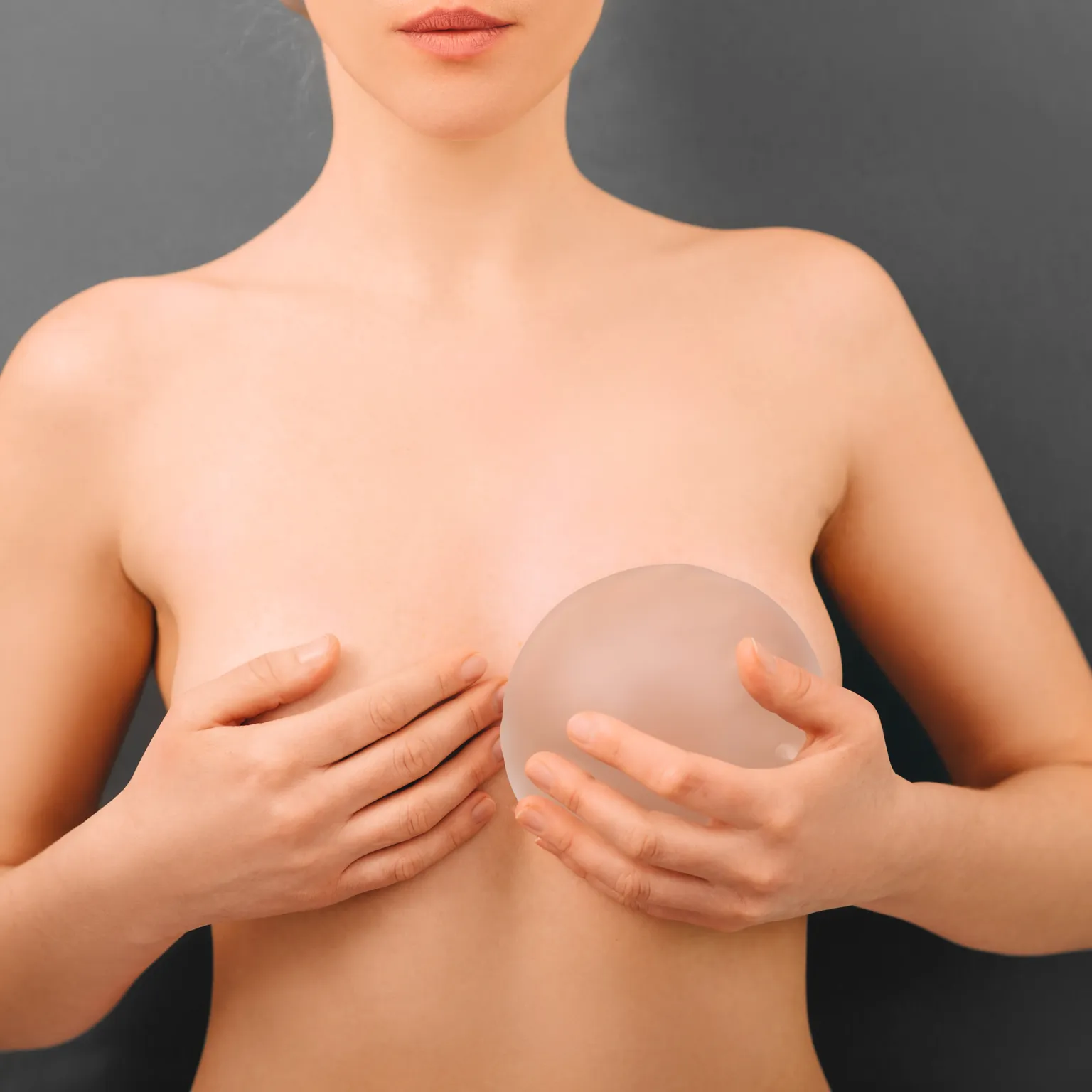
Prótese de Silicone
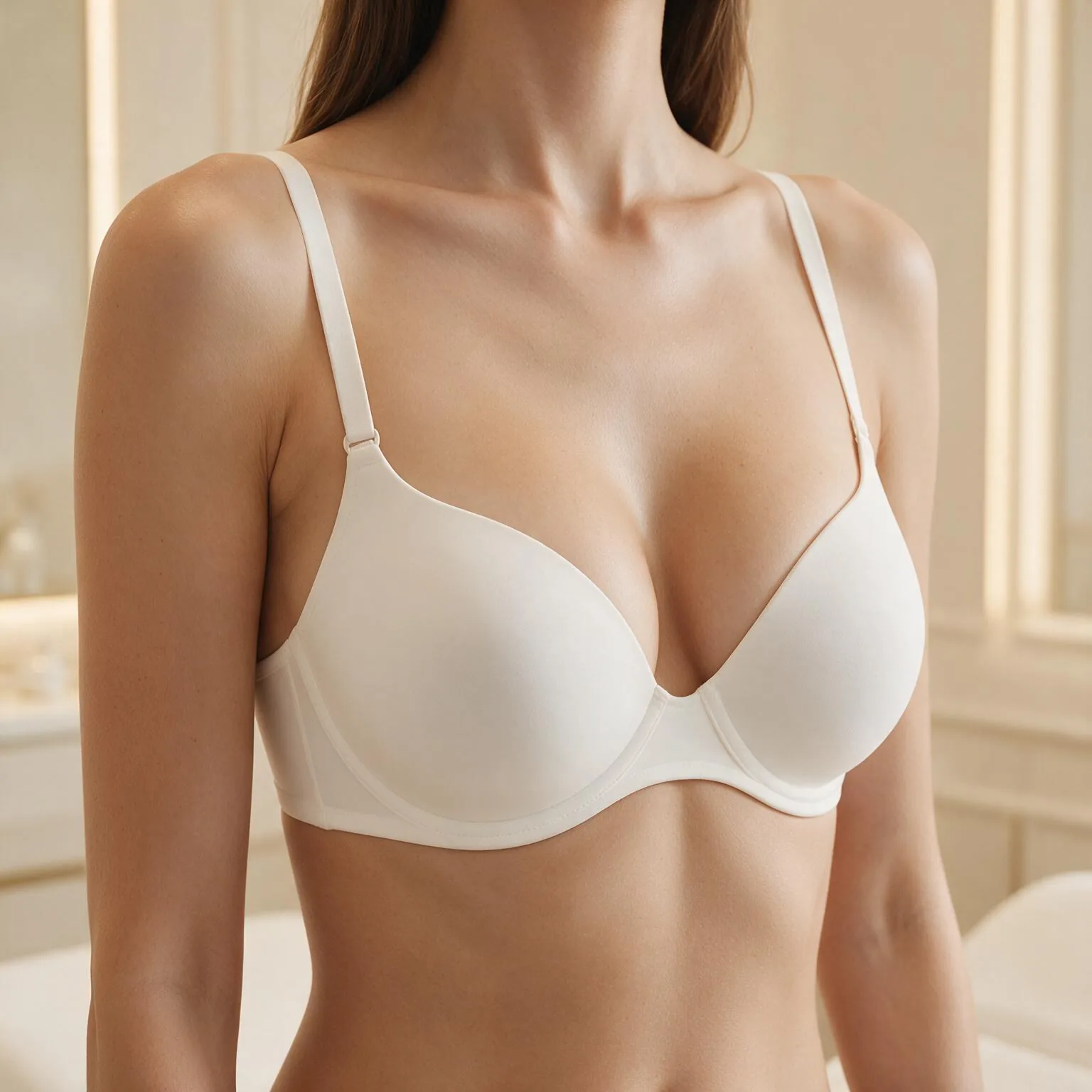
Silicone breast implants internationally known as silicone prostheses are medical devices filled with cohesive silicone gel, used to add volume, restore shape after pregnancy or weight loss, correct asymmetry, and reconstruct the breast. Planned to your frame, not a cup size.
The Offices 2, One Central, 6º andar, Dubai, Emirados Árabes Unidos
What is a silicone prosthesis (breast implant)?
A silicone breast implant is a medical device with a silicone shell filled with cohesive silicone gel, placed surgically to add volume and shape to the breast. Modern cohesive gel often called “gummy bear” gel holds its form even if the shell is damaged, a major safety and feel improvement over the liquid-filled implants of earlier generations. Implants are one option within breast surgery in Dubai; where position rather than volume is the concern, a lift may be needed with or instead of an implant.
Silicone breast implants differ in four ways that together define how the result looks and feels: shape (round vs anatomical teardrop), surface (smooth vs textured discussed openly, including the safety background below), profile (how far the implant projects for a given base width profile shapes the look more than volume does), and size (measured in cc, but chosen by frame, not by number). If your breasts sit wide apart and cleavage is the goal, base width and projection matter more than volume the guide to wide-set breasts explains why.
How the right implant size is chosen
The right size is chosen by measuring your frame chest width, tissue thickness and skin quality not by picking a number of cc or copying a photograph. The same implant looks completely different in two different bodies.
In Dr. Valente’s practice the sizing conversation follows the Brazilian principle his training is built on: proportion first the implant serves your body, not the other way round. Fake-looking results come from oversizing, not from implants themselves. On sizing for the decades ahead, read choosing a natural look that ages well.
Implant placement: over or under the muscle?
| Above the muscle (subglandular) | Below the muscle (submuscular) | Dual plane | |
|---|---|---|---|
| Best for | Good natural tissue coverage | Thin tissue, more coverage needed | Combination needs |
| Look | Fuller upper pole | More gradual, natural slope | Balanced |
| Recovery | Usually faster | Slightly longer, more early soreness | Intermediate |
| Screening | Discussed at consultation | Often easier mammogram views | Case dependent |
Placement is chosen for your anatomy, not by fashion.
Silicone vs saline implants
| Silicone (cohesive gel) | Saline | |
|---|---|---|
| Feel | Closest to natural breast tissue | Firmer, less natural |
| If the shell fails | Gel holds its shape; detected by imaging | Deflates visibly; saline is absorbed |
| Use today | The standard choice worldwide | Selected cases |
| Monitoring | Periodic review, imaging as advised | Visible deflation |
Silicone cohesive gel is the standard in modern practice the honest reason is feel and behaviour, not marketing.
Your implant device card and serial number
Every breast implant has a manufacturer, model and serial number, and you should receive them in writing after surgery. This is your device card: it matters for warranty, future imaging and any recall notice. A practice that hands you your implant documentation without being asked is showing you how it treats devices placed in your body. Ask for it anywhere you consult.
How breast implant surgery is performed
Surgery takes place under anaesthesia administered by a dedicated anaesthetist in a licensed hospital, usually as a day procedure.
- 1
Consultation and sizing
Examination, frame measurement and a sizing session trying realistic options with an honest conversation about what suits your tissue.
- 2
Planning and marking
The surgical plan, incision placement and implant pocket are mapped to your anatomy.
- 3
Anaesthesia and incision
A discreet incision, most commonly in the fold under the breast, keeps the scar hidden in a natural line.
- 4
Pocket creation and placement
The implant pocket is created in the planned plane, the implant positioned, and symmetry checked.
- 5
Closure and recovery
Layered closure, a support garment, and clear aftercare instructions. You go home the same day in most cases.
A realistic recovery timeline
| Stage | What to expect |
|---|---|
| First 24 hours | Rest; tightness and soreness managed with medication. |
| Week 1 | Support garment; short walks; sleeping on your back, slightly elevated. |
| Weeks 2–4 | Most patients return to desk work early in this window; swelling settles. |
| Weeks 4–6 | Light exercise on clearance; avoid chest training. |
| From week 6 | Progressive return to full training, on clearance. |
| 3–6 months | Implants settle into final position; scars begin fading over 12–18 months. |
Judge your result at six months, not six days. Immediately after surgery implants sit high and tight this is expected. They settle as swelling resolves and tissue relaxes.
Risks, BIA-ALCL and screening the straight conversation
The honest risk list, discussed fully at consultation: infection, bleeding, capsular contracture (scar tissue tightening around the implant), implant rupture, displacement or rotation, asymmetry, and temporary or occasionally persistent changes in nipple sensation. Choosing a qualified surgeon, a licensed hospital and an appropriate implant reduces risk; it never removes it.
BIA-ALCL is a rare lymphoma associated primarily with certain textured implants, and it is the reason surface choice is discussed openly today. “Breast implant illness” describes a pattern of symptoms some patients report; it remains under study, and patients deserve a straight conversation about it rather than dismissal.
Mammograms and screening continue with implants. Tell the radiology team you have implants so they use the appropriate views; additional images are routine, not a cause for alarm.
How long do breast implants last?
Breast implants are not lifetime devices but they do not need automatic replacement every 10 years, which is a persistent myth. They should be monitored over the years and exchanged if a problem develops or your goals change. Many implants remain in place well beyond a decade without issue; the commitment you are making is monitoring, not a scheduled replacement.
Revision, exchange and removal: revision surgery adjusts or replaces implants exchanging for a different size, correcting contracture or displacement, removal with or without a lift. Wanting a change years later is normal, not a failure; implants placed in your twenties may not match your body or preferences at fifty. Revision is generally more nuanced than first-time surgery and benefits from reconstructive experience. This preference is part of the shift to implant removal and downsizing seen across the market. And where heaviness rather than volume is the actual concern, see breast reduction for heavy breasts.
What do breast implants cost in Dubai?
The cost depends on the implant chosen (brand and type), the surgical plan (augmentation alone or with a lift), the facility and anaesthesia, and follow-up care. You receive a written, itemised quote at consultation, with no obligation and no same-day pressure.
Be cautious with quotes far below market: the savings usually come from the implant, the anaesthetist or the facility exactly the wrong places to save. See plastic surgery costs in Dubai for what a serious quote should include, and the breast surgery overview for lift and reduction options. Every implant consultation is performed personally by Dr. Augusto Valente.
Seja qual for o profissional que você consultar aqui ou em outro lugar decida com base em evidências, não em marketing. Comece por como escolher um cirurgião plástico em Dubai.
Prótese de Silicone: perguntas frequentes
Respostas diretas sobre procedimentos, indicação, recuperação e o agendamento da sua consulta com o Dr. Augusto Valente em Dubai.
What is a silicone prosthesis?
The international term for a silicone breast implant: a cohesive-gel-filled medical device used to add breast volume and shape.Are silicone breast implants safe?
Modern cohesive gel implants are extensively studied medical devices with a strong record when placed by qualified surgeons in licensed facilities. Risks exist and are discussed openly at consultation, including rare conditions such as BIA-ALCL.Do implants need replacing every 10 years?
No that is a myth. Implants are monitored over time and exchanged if a problem develops or goals change, not on a schedule.Will implants look natural?
Sized to your frame and placed in the right plane, yes. Fake-looking results come from oversizing, not from implants themselves.What size should I choose?
The size your frame measurement supports; profile shapes the look more than cc volume. This is decided at a sizing consultation, not from a photograph.Can I breastfeed with implants?
Many women breastfeed successfully after augmentation; incision and placement choices influence this, so raise it at consultation.Do implants affect mammograms?
Screening continues with implants; inform the radiology team so they use appropriate views. Additional images are routine.Can implants rupture?
Rarely, yes. Cohesive gel holds its shape if the shell fails, which is why periodic review and imaging are advised.Can implants be combined with a lift?
Yes. When the nipple sits at or below the fold, a lift restores position while the implant restores volume.Can pregnancy change my result?
Yes pregnancy and weight change can alter the breast tissue around any implant; the implant itself is unaffected.Will there be scars?
Yes a short scar at the incision site, most commonly hidden in the fold under the breast, fading substantially over 12 to 18 months. No breast implant surgery is scarless.Can people tell I have implants?
Sized to your frame and placed correctly, implants read as your own body. Detection usually comes from oversizing, not from the implant itself.What happens at the consultation?
Examination, frame measurement, a sizing session, an honest recommendation, and a written quote with no pressure to decide on the day. If an implant is not the right answer for you, you will be told so.How much do breast implants cost in Dubai?
It depends on the implant, the surgical plan, the facility and anaesthesia, and follow-up. You receive a written, itemised quote at consultation.
Quer saber mais? Ver o FAQ completo.